As an Amazon Associate, we earn from qualifying purchases. Some links may be affiliate links at no extra cost to you. Although our opinions are based on curated research, we haven't used these products. Articles generated with AI.

Mastering How To Keep Score In Pickleball For Beginners

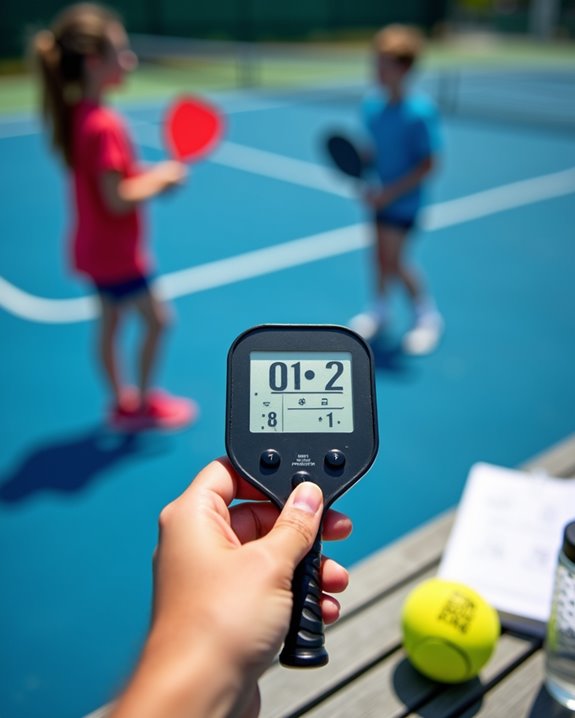
In pickleball, you’ll need to announce the score before each serve. For singles, call out two numbers: your score then opponent’s score. In doubles, use three numbers: your team’s score, opponent’s score, and which server you are (1 or 2). Remember to serve from the right court when your score is even, and left when odd. Only the serving team can score points, and games typically go to 11 points (win by 2). The three-number system becomes second nature once you practice calling scores consistently.
Key Takeaways
- Only the serving team can score points, with service switching to the opponent after a fault.
- Singles scoring requires two numbers (server’s score, receiver’s score), while doubles uses three numbers (serving team’s score, receiving team’s score, server number).
- Serve from the right court when your score is even (0, 2, 4) and from the left court when odd (1, 3, 5).
- Games typically go to 11 points with a 2-point margin required to win.
- Always announce the score clearly before each serve to prevent confusion and disputes.
The Basics of Pickleball Point Scoring
You may be interested


5 Critical Steps To Become A Pro Pickleball Player
April 4, 2025

The scorekeeping recipe in pickleball might seem like a complex dish at first, but once you’ve mastered the ingredients, you’ll be serving up accurate scores with confidence!
Unlike rally scoring in other sports, only the serving team can earn points when the receiving team commits a fault. You’ll need to call the score clearly before each serve, which keeps everyone on the same page. When your score is even (0, 2, 4…), you’ll serve from the right (deuce) side. With an odd score (1, 3, 5…), you’ll serve from the left (ad) side.
In doubles scoring, you’ll announce three numbers: serving team’s score, receiving team’s score, and server number (1 or 2). This three-number format always begins at 0-0-2 for every doubles game. Remember to switch sides after each point you score!
Understanding the 11-Point Win System
While newcomers often focus on perfecting their dink shots, understanding pickleball’s 11-point win system is the secret sauce that’ll elevate your competitive edge!
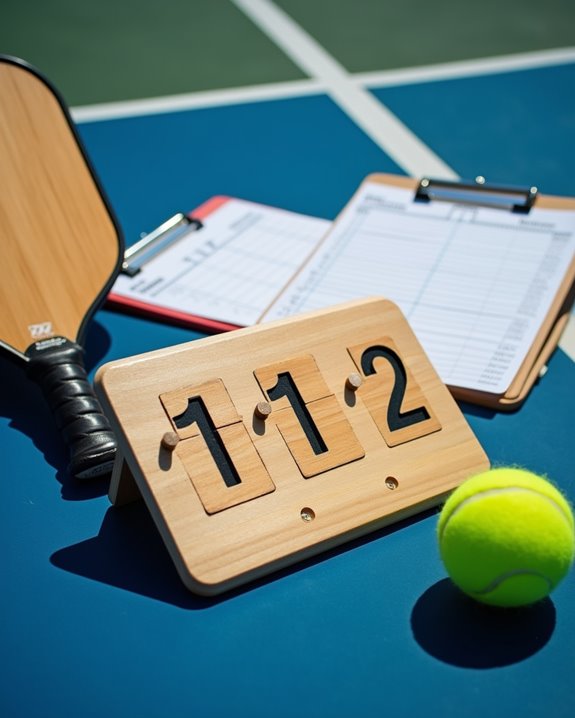
Here’s the recipe for victory: you need exactly 11 points and a 2-point margin to win. Remember, only the serving side can score a point—the receiving team merely gains the opportunity to serve when they win a rally.
Scoring in pickleball rewards the server—win to earn points, receive to earn opportunity. Victory demands both 11 points and a 2-point cushion.
When scores sizzle to 10-10, the game continues until someone establishes that vital 2-point margin. Think of it as reducing your competition to a fine reduction!
While tournament formats might increase the target to 15 or 21 points, recreational play typically sticks with 11. This knowledge shapes your strategy—knowing when to play conservatively or when to serve up aggressive shots during critical points.
Announcing Scores in Singles vs. Doubles
Two distinct scoring announcement systems exist in pickleball, and mastering both is as essential as knowing the difference between folding egg whites and beating them!
In singles, you’ll announce just two numbers: your server’s score followed by the receiving team’s score. For example, “3-2” means you (as server) have 3 points while your opponent has 2.
Doubles play requires a three-number approach, like adding an extra ingredient to your recipe. You’ll call out the serving team’s score, the receiving team’s score, and the server number (first server or second server): “4-3-1” indicates your team has 4 points, opponents have 3, and the first server is serving.
Always announce the score before serving—it’s the perfect way to keep everyone at the kitchen line informed and ready!
Recommended Products

【PORTABLE PICKLEBALL SCORER BRACELET】Our lightweight and compact design allows you to easily carry the Pickleball Score Keeper Wristband, ensuring you can track your scores wherever you go, relieving the burden of keeping scores in your head. Say goodbye to memory lapses during play – this scorer has you covered!
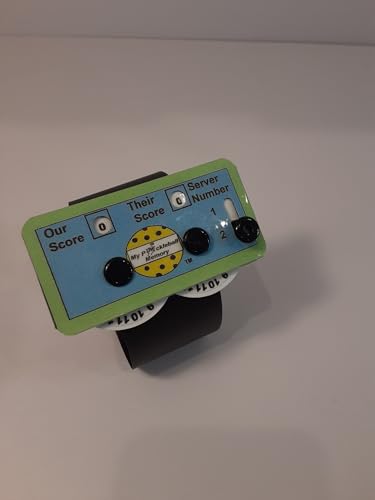
Wrist-Mounted Design: Lightweight, comfortable wrist-mounted design for hands-free scorekeeping during play
Mastering the Three-Number System in Doubles
Understanding doubles scorekeeping in pickleball might seem as complex as perfecting a soufflé, but once you’ve mastered the technique, you’ll serve it up effortlessly!
In doubles, you’ll announce three numbers: first your team’s score, then the opponent’s score, followed by your server number (1 or 2). For example, “6-4-2” means your team has 6 points, they have 4, and your second server is at the line.
The first server always dishes from the right side when the score is even and the left when odd. After scoring, the serving team switches positions while the receiving team stays put. When the serving team faults, the second server steps up. Once both servers fault, it’s the receiving team’s turn to heat things up!
Recommended Products

TENNIS & PICKLEBALL HOLDER - Our pickleball ball holder can hold 3 tennis balls or pickleball balls at once. Save your training time by wearing this tennis ball pouch, you won't need to pick up the ball frequently. Note: The balls is NOT included.

【PORTABLE PICKLEBALL SCORER BRACELET】Our lightweight and compact design allows you to easily carry the Pickleball Score Keeper Wristband, ensuring you can track your scores wherever you go, relieving the burden of keeping scores in your head. Say goodbye to memory lapses during play – this scorer has you covered!

Wrist-Mounted Design: Lightweight, comfortable wrist-mounted design for hands-free scorekeeping during play
When and Where to Serve Based on Your Score
Now that you’ve got the three-number system simmering in your mind, let’s plate up another key ingredient in pickleball scorekeeping: knowing exactly where to serve from based on your score.
Think of the court as your kitchen layout—right side for even scores, left side for odd. In singles, you’ll always begin serving from the right side at 0-0, then alternate sides as your score changes. For doubles, the serving team follows the same recipe: start from the right side and switch based on your score’s parity. Getting comfortable with the core serving rules makes this positioning second nature.
To keep track effortlessly, remember this simple garnish: even scores (0, 2, 4…) mean serving from the right; odd scores (1, 3, 5…) mean serving from the left. Announcing the score before each serve helps everyone digest the game’s progress!
Handling Side-Outs and Server Switches
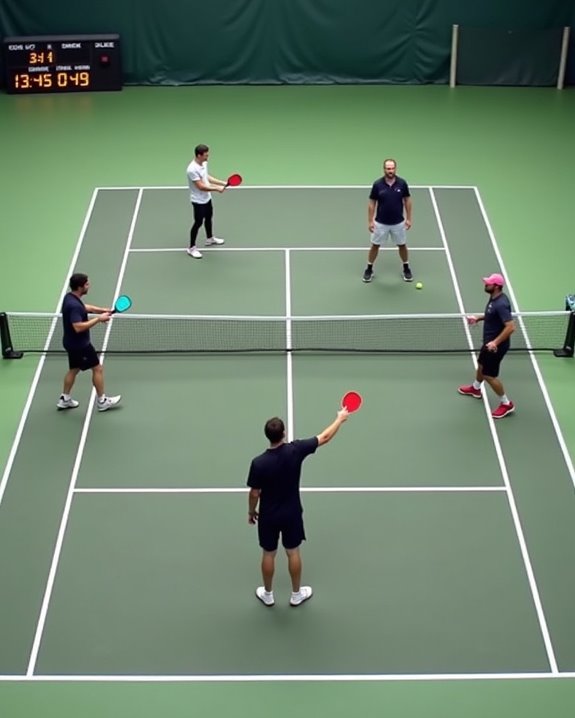
When the rally heats up and ultimately ends with the serving team committing a fault, you’ve just witnessed a side-out—the culinary equivalent of passing the spatula to the other chef. No points are garnished for the serving team’s score during this changeover.
Remember, the first server continues serving until your team loses the rally. Then, your second server takes their turn at the serving line. If the second server loses, it’s a complete side-out.
As players switch sides after scoring, you’ll move to the odd court when your score is odd and the even side when it’s even—just like sorting ingredients into separate bowls. When announcing the score, your team’s score is always first, followed by the opponent’s score and your server number (1 or 2).
Common Scoring Mistakes to Avoid
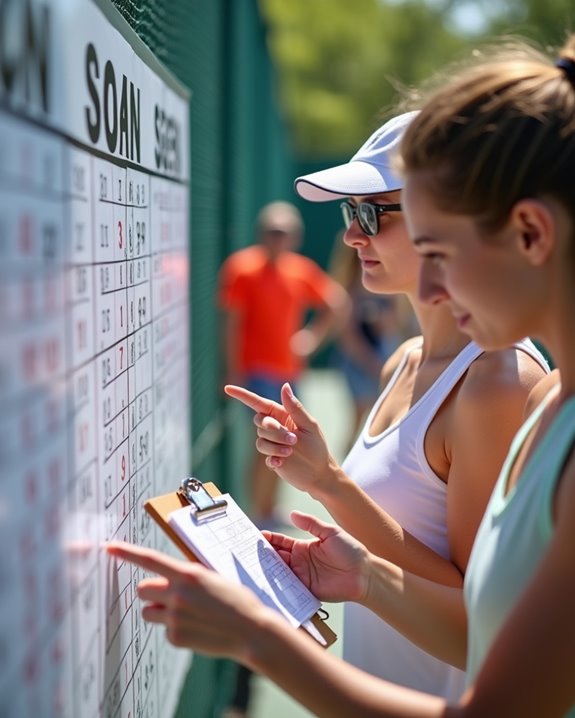
Even the most seasoned pickleball chefs occasionally burn their scoring toast! When serving up points, don’t forget to announce all three ingredients: serving team’s score, receiving team’s score, and server number. This prevents miscommunication during play that could leave everyone with a bad taste.
Remember your court positioning recipe: when your team’s score is even, serve from the right side. Serving from the wrong side is like adding salt instead of sugar—the serving team loses their turn!
In doubles scoring, tracking which server is active (first or second) is essential. It’s the difference between a perfectly timed soufflé and a deflated disaster. Always confirm the score with opponents before serving, like checking your measurements before mixing your pickleball batter!
Recommended Products

Versatile Dry Erase Coaches Clipboard: Our coaches clipboard is the perfect tool for strategizing and communicating with your team during practices and games. Enhance your coaching skills with this multipurpose whiteboard designed for coaches and players.

Compact & Portable Structure: this scorekeeper compatible with pickleball measures about 9.84 x 6.69 inches/ 25 x 17 cm with a compact size for easy carrying and storage, and it comes with a dedicated storage bag. It can be placed on tables, hung on fences or set near courts, and is widely applied in various indoor and outdoor ball playing and training scenarios

Enhance Coaching Efficiency: Elevate your coaching game with our volleyball clipboard, designed specifically for volleyball coaches. Streamline your strategies and communicate effectively during timeouts and training sessions.
Adapting to Different Scoring Formats
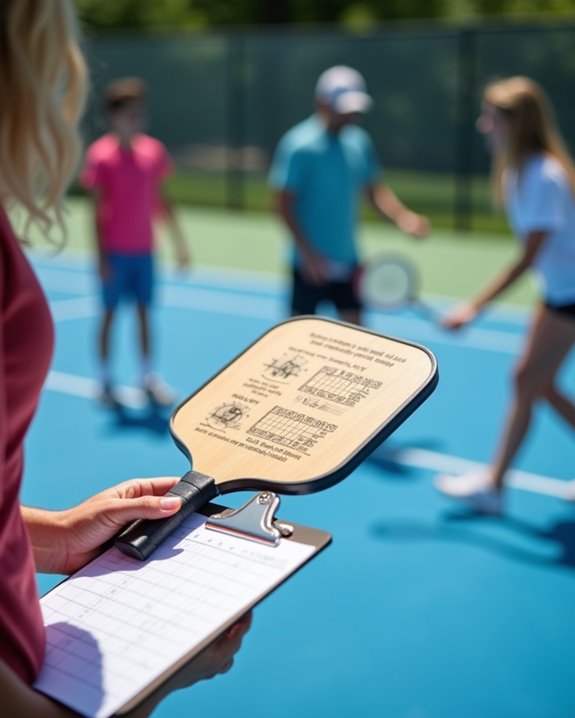
Pickleball’s scoring menu offers a variety of flavors to satisfy different playing appetites! You’ll need to master both traditional pickleball scoring and rally scoring to become a well-rounded player.
In traditional scoring, only the serving team earns points when they win the rally, like a chef who only gets paid for perfect dishes. Rally scoring, however, allows either team to score regardless of who served—making games move faster, like quick-fire cooking competitions.
When switching between doubles scoring (with its three-number format including server number) and singles, think of it as adapting between complex and simple recipes. Tournament play often features games to 15 or 21 points, while recreational play typically simmers down to 11-point matches with a 2-point margin victory requirement.
Recommended Products
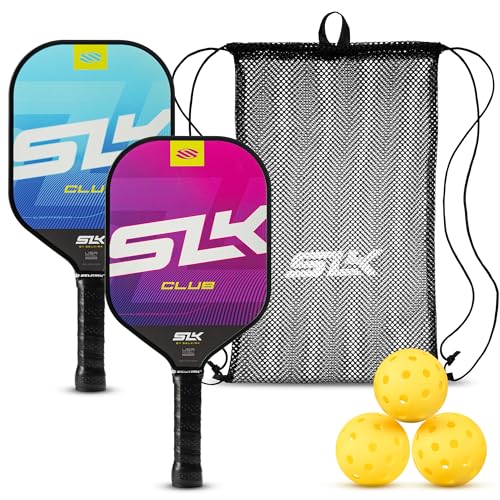
Perfect for New Players: The SLK CLUB Pickleball Paddle Bundle is the ideal starter set for those just getting into the game. With four lightweight, well-balanced paddles, it's designed to help beginners build confidence and control on the court.

Premium Performance: The leading maker of performance pickleball paddles, balls, and pickleball accessories, ONIX provides players, including national tournament competitors, with the best possible pickleball racquets and balls for their game
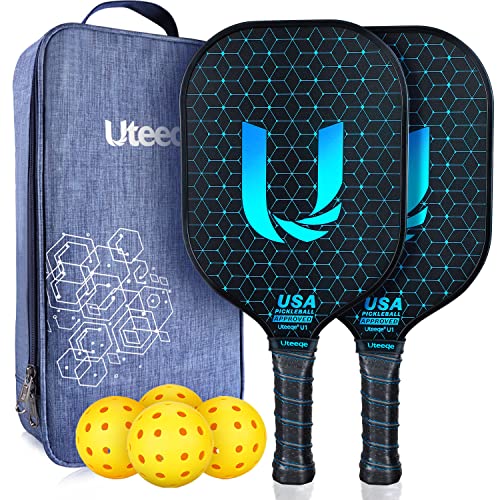
【 Stronger & More Durable Thermoformed Construction 】Unlike cheap cold-pressed paddles, the Uteeqe U1 pickleball paddle set features a thermoformed reinforced construction that’s over three times stronger, ensuring superior durability and stability. This seamless design provides a solid, consistent feel with every shot, minimizing weak points. Paired with a polymer honeycomb core and premium graphite face, this paddle offers a perfect balance of power, precision, and long-lasting quality.
Practical Drills to Improve Score-Keeping Skills
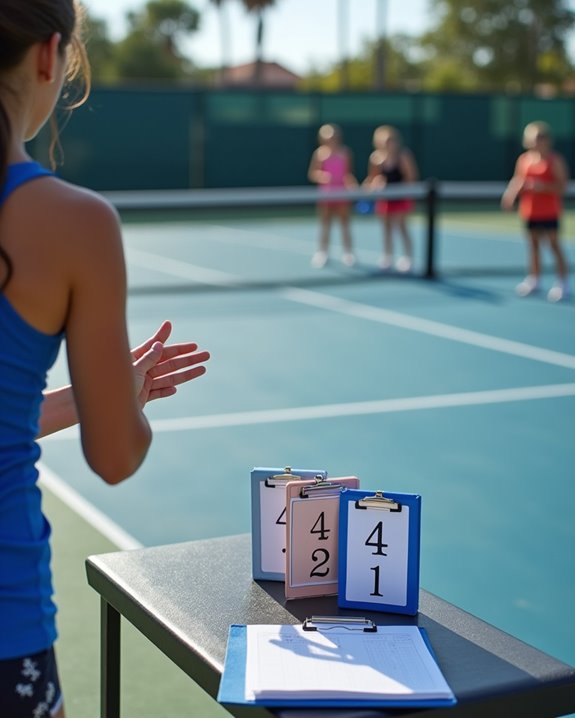
Now that you’re familiar with different scoring formats, let’s heat up your scorekeeping skills with practical training exercises!
Begin by practice calling the score aloud before each serve—think of it as announcing your dish before serving it to guests. Set up mock games where players rotate serving duties while tracking the three-number scoring format. This helps your score recall simmer to perfection under pressure.
Record scores during practice using an app or notepad, folding this habit into your regular routine. Try drills where players intentionally commit faults, requiring you to adjust and announce the updated score—like adjusting seasoning mid-recipe.
Finally, organize mini-tournaments with friends in a competitive context. These real-game scenarios will bake strong score-keeping skills into your pickleball repertoire.
Recommended Products

Whether you're stepping onto the court for casual recreational play, competing in organized leagues, or participating in USA Pickleball-sanctioned tournaments, this rulebook...
Frequently Asked Questions
How to Keep Score in Pickleball for Dummies?
You’ll never win if you can’t count! Learn scoring methods: call three numbers in doubles (scores + server number), two in singles. Beginners often forget serving rules: serve from right when even, left when odd.
What Is the 10 Second Rule in Pickleball?
You’ve got 10 seconds to serve after the score’s called—it’s proper pickleball etiquette to maintain match pacing. This rule prevents game interruptions, requiring your serve preparation, player focus, time management, court awareness, and competitive spirit.
What Are Three Things You Cannot Do in the Game of Pickleball?
In pickleball, you can’t step into the kitchen to volley, hit the ball twice in succession, or serve from the wrong position. These common fouls break basic pickleball etiquette that beginners should master before developing advanced scoring strategies.
What Is the Golden Rule Pickleball?
The golden rule in pickleball is treating others as you’d want to be treated. While learning the scoring system and game etiquette, remember that respect trumps serve rotation, fault rules, and scoring strategies in creating positive player experiences.