As an Amazon Associate, we earn from qualifying purchases. Some links may be affiliate links at no extra cost to you. Although our opinions are based on curated research, we haven't used these products. Articles generated with AI.

How Do You Play Pickleball on Different Grass Surfaces in 2026?

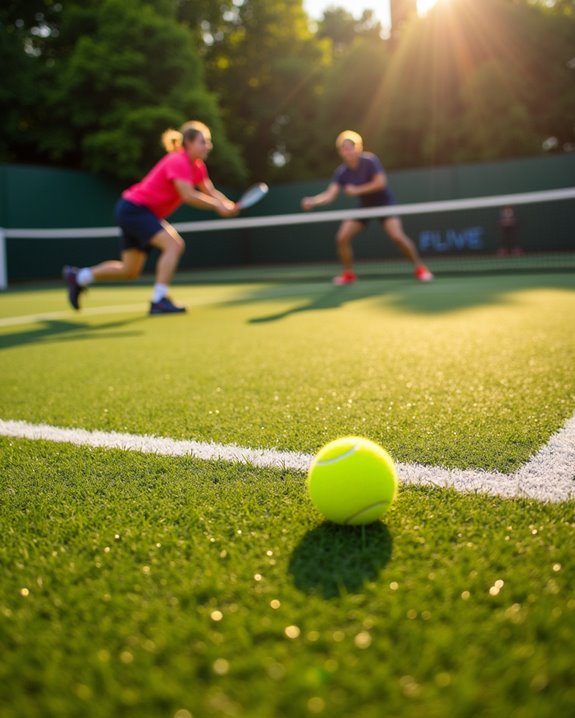
To play pickleball on grass surfaces, you’ll need to adapt your approach. Choose the flattest section of your lawn and trim it short for consistent bounce. Mark standard 44′ x 20′ dimensions with chalk or paint, including the 7′ kitchen zone. Use rubber balls for better grass performance and paddles with enhanced grip textures. Keep your center of gravity low, employ softer strokes, and wear shoes with substantial traction. These adjustments will transform your backyard into a pickleball paradise.
Key Takeaways
- Trim grass to its lowest setting and select the flattest lawn area for consistent ball bounce during play.
- Use rubber balls specifically designed for grass surfaces to achieve better bounce and control.
- Modify your technique with softer strokes and more volleys to compensate for grass’s uneven surface.
- Wear shoes with substantial traction to prevent slipping on grass, especially when wet or dewy.
- Consider temporary court markers for casual play or install permanent lines for frequent grass pickleball games.
Second-Level Headings for “How Do You Play Pickleball on Different Grass Surfaces in 2026?”
You may be interested
10 Best Pickleball Bag for Balls
May 15, 2025
10 Best Pickleball Net 22FT
May 15, 2025
Why not take your pickleball passion beyond traditional courts and onto the lush green spaces around you? If grass isn’t an option nearby, our roundup of the best places to play pickleball can point you toward a dedicated court. Playing pickleball on grass requires careful preparation, much like preparing a delicate soufflé—attention to detail is everything.
Venture beyond concrete and asphalt to transform your backyard into a pickleball paradise with meticulous lawn preparation.
When crafting your grass pickleball experience, consider these essential headings for your backyard adventure:
- Preparing Your Lawn: Creating the Perfect Court Canvas
- Court Dimensions: Measuring Your 44×20 Foot Grass Stage
- Equipment Modifications: Why Rubber Balls Perform Better
- The Kitchen Zone: Marking Your 7-Foot Non-Volley Area
- Adapting Your Technique: Volleying vs. Groundstrokes
- The Double Bounce Rule: How It Changes on Softer Surfaces
- Temporary vs. Permanent Court Solutions
Preparing Optimal Grass Courts for Pickleball Play
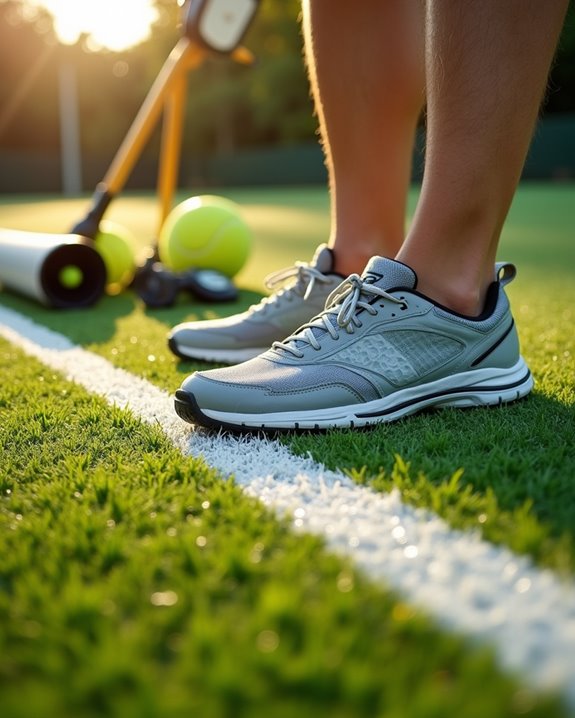
When transforming your backyard into a pickleball paradise, the foundation—much like a perfect pie crust—requires careful preparation before you can enjoy the fruits of your labor. Start by selecting the flattest section of your lawn, then trim the grass low—think of it as brunoise-cutting vegetables for consistent results.
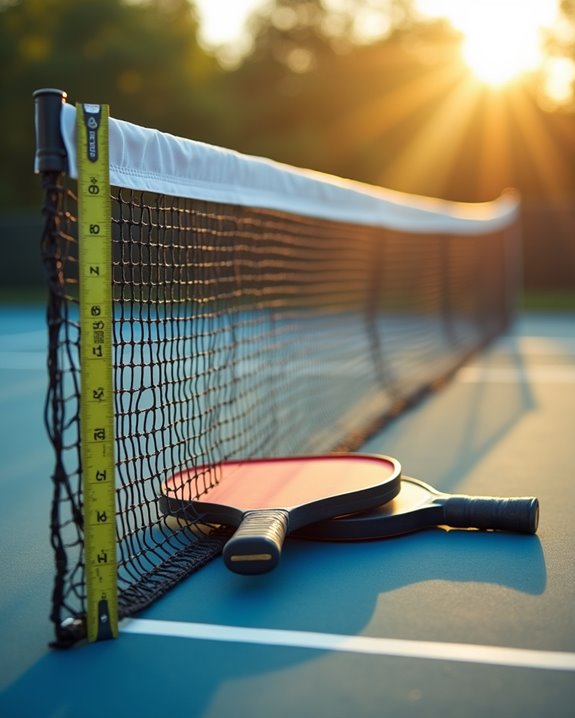
Mark your court to the precise dimensions: 44 feet long by 20 feet wide, with the kitchen zone extending 7 feet from the net. For line markings, you can fold in either chalk (temporary) or paint (a more permanent reduction).
For ideal pickleball equipment selection, consider rubber balls that bounce more consistently on grass than traditional wiffle balls. Regular maintenance—mowing and leveling—ensures pickleball players enjoy a crisp, clean playing experience without unwanted hazards folded into your game.
Recommended Products

[Ultra-durable] Define any space quickly and easily with this floor marking vinyl tape. Our pickleball court tape is tough enough to adhere to any floor or hard surface and remain in place. It can withstand high foot traffic and equipment, so you can depend on this floor tape to keep your areas spaced and marked.

[Ultra-durable] Define any space quickly and easily with this floor marking vinyl tape. Our pickleball court tape is tough enough to adhere to any floor or hard surface and remain in place. It can withstand high foot traffic and equipment, so you can depend on this floor tape to keep your areas spaced and marked.

WORRY-FREE SET: Our team is committed to creating high-quality pickleball court marking kits, so we have carefully prepared a 5-piece pickleball court set to help you get a pickleball court quickly.
Equipment Modifications Needed for Grass Pickleball
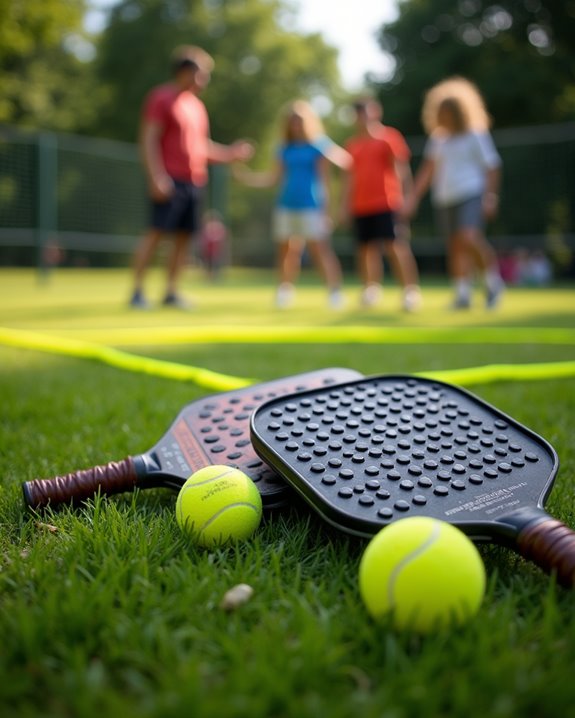
Shifting your pickleball game to grass surfaces requires equipment adjustments that’ll make your outdoor experience as smooth as folding whipped cream into a mousse. Your standard pickleball paddle will work, but consider models with enhanced grip textures that’ll help you maintain control on the unpredictable grass terrain.
Swap traditional wiffle balls for rubber alternatives that’ll bounce more consistently, even on artificial turf installations. Like selecting the perfect spatula for delicate pastry work, choosing proper footwear with substantial traction prevents embarrassing slips during intense rallies.
Don’t forget to adjust your net height appropriately for grass conditions—portable nets with customizable settings are the secret ingredient here. Mark your court dimensions (44×20 feet) using durable materials that won’t vanish after the first morning dew, ensuring your pickleball gear remains competition-ready regardless of surface. Grass too soft for your taste? A firmer alternative is repurposing a hard court, as we cover in our guide to playing pickleball on a tennis court.
Recommended Products
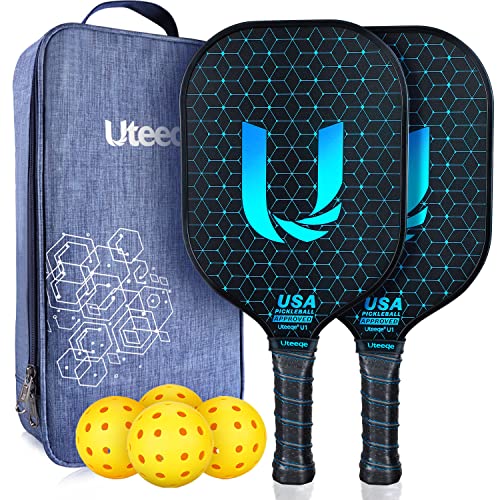
【 Stronger & More Durable Thermoformed Construction 】Unlike cheap cold-pressed paddles, the Uteeqe U1 pickleball paddle set features a thermoformed reinforced construction that’s over three times stronger, ensuring superior durability and stability. This seamless design provides a solid, consistent feel with every shot, minimizing weak points. Paired with a polymer honeycomb core and premium graphite face, this paddle offers a perfect balance of power, precision, and long-lasting quality.

FAMILY-OWNED: At Selkirk, we are committed to fueling the pickleball obsession found within every player. Through uncompromising quality and a never-satisfied drive for innovation, we serve players around the world from beginners to pros.

FAMILY-OWNED: At Selkirk, we are committed to fueling the pickleball obsession found within every player. Through uncompromising quality and a never-satisfied drive for innovation, we serve players around the world from beginners to pros.
Adapting Your Gameplay Technique for Various Grass Types
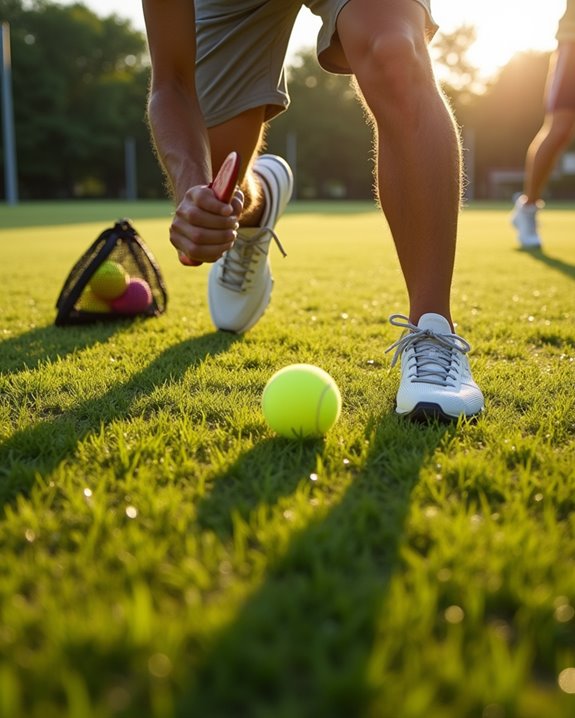
The texture and consistency of grass courts demand a complete recipe overhaul for your pickleball strategy. You’ll need to fold in a lower center of gravity to maintain balance and stability while moving across uneven grass surfaces. Think of your strokes as delicate soufflés—use softer strokes and focus on volleying rather than groundstrokes to compensate for reduced bounce.
Different grass varieties require unique techniques. On thicker grass, you’re working with a heavier base—expect more resistance when pushing off. Your footwork must be seasoned according to conditions; slower movement means you’ll need to pre-heat your positioning!
Don’t forget to garnish your game with appropriate footwear featuring robust traction. The right shoes are your secret ingredient for preventing slips while traversing the softer terrain with confidence.
Recommended Products

Wilson Pickle Pro Men's Pickleball Shoe - White, Size 12 US

LIGHTWEIGHT TENNIS SHOES FOR MEN - SURGELITE cushioning delivers lightweight, flexible comfort for quick movement on court. Built for players seeking responsive men's tennis shoes for practice, matches, and everyday court play.

BUILT FOR DEVELOPING PLAYERS - Designed for players looking to improve their game, these tennis shoes deliver the right balance of support, stability, and comfort for practice, training, and match play.
Sandy Pickle vs. Traditional Grass Pickleball: Key Differences
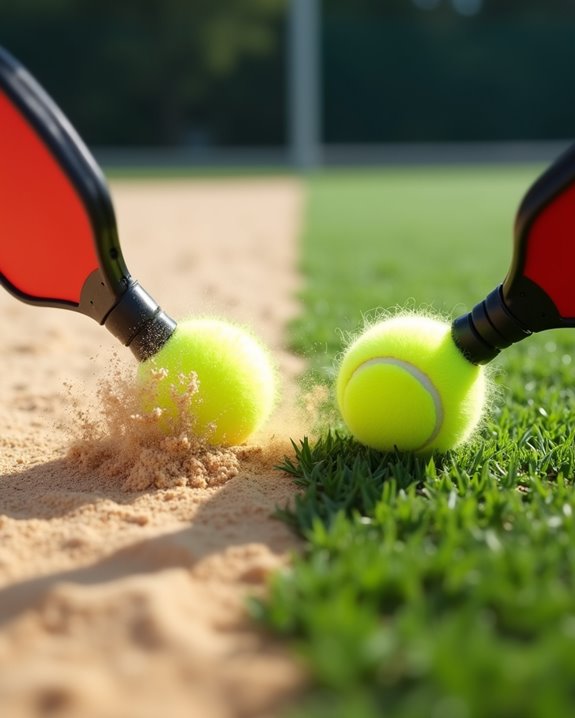
Now that you’ve mastered your technique across various grass courts, let’s serve up something completely different!
Sandy Pickle is a fresh take on our beloved sport, specifically simmered for soft surfaces. While traditional grass pickleball maintains regulation 44′ x 20′ dimensions with standard center lines, Sandy Pickle reduces the court size dramatically—just 16′ 8″ wide for doubles play.
Sandy Pickle serves up a compact twist on traditional play, bringing the heat to sand courts with its tighter dimensions for fast-paced volleys.
You’ll notice the higher net in Sandy Pickle, whipped up to accommodate player height on sand. The most distinctive flavor? The “No Spike Zone” extending 5 feet from the net, replacing the traditional Non-Volley Zone concept.
Traditional grass pickleball follows conventional rules with an emphasis on groundstrokes, while Sandy Pickle eliminates the center line, creating a cleaner playing surface that encourages quick volleys and rapid-fire exchanges.
Recommended Products

17FT NET – Best for outdoor open spaces. Designed for 2-on-2 play, making it perfect for doubles matches and family fun.

PLAY ANYWHERE: Weighing 2.7 lbs. and measuring only 18” long in the backpack, our pickleball net lets you play wherever you go. Set up this pickleball net in a court, grass, sand, driveway, and more. It is your very own portable pickleball court!

𝐒𝐭𝐮𝐫𝐝𝐲 𝐍𝐞𝐭: Upgraded and fine material make our net more tear-resistant, no breakage and deformation even though after being used 2 to 3 years. Side sleeves of 4 inches are made of waterproof and UV-resistant 600D polyester fabric, 1.5 inches knoted PE net is durable. And the top of net boasts 420D polyester fabric while the bottom of net has great elastic hem. All of these make our net definitely stable.
Frequently Asked Questions
Can You Play Pickleball on Any Surface?
You can play pickleball on various court types, but each surface has advantages. Grass surfaces differ in firmness and moisture content, affecting gameplay. For grass, you’ll need specialized equipment recommendations like rubber balls.
How to Play Pickleball on the Grass?
To play pickleball on grass, you’ll need proper grass court setup with level, short-trimmed surfaces. Consider equipment considerations like rubber balls for better bounce. Adapt gameplay techniques and rule adaptations including modified no-spike zones for smoother play.
Can You Play Pickleball on Synthetic Grass?
Yes, you can play pickleball on synthetic grass! Court dimensions remain 44×20 feet. You’ll enjoy player comfort and reduced injury risk. Regular maintenance considerations include brushing to preserve synthetic grass advantages like consistent bounce.
What Is the Best Surface for Pickleball Knees?
Ever wondered why your knees hurt after pickleball? For ideal knee impact reduction, you’ll want surfaces with maximum cushioning. Soft grass or sand provides the best joint protection and injury prevention compared to hard courts.