As an Amazon Associate, we earn from qualifying purchases. Some links may be affiliate links at no extra cost to you. Although our opinions are based on curated research, we haven't used these products. Articles generated with AI.

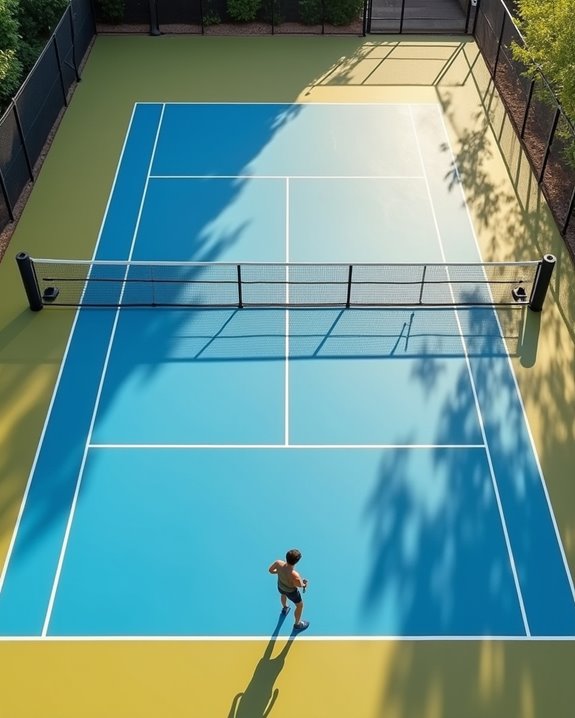
How Many Square Feet Does a Standard Pickleball Court Require?

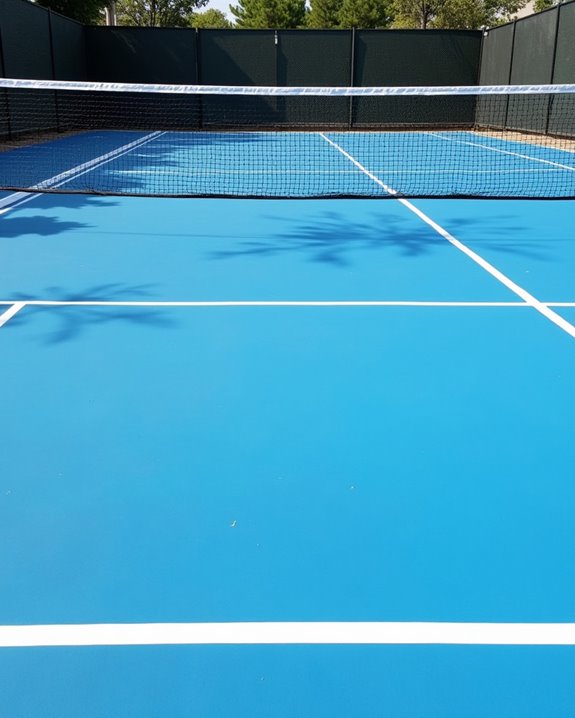
A standard pickleball court requires 880 square feet (20′ × 44′) for the actual playing surface, but you’ll need about 1,800 square feet (30′ × 60′) to include essential safety buffer zones. These cushions give you room to chase down those zippy dinks and powerful smashes without risking injury. When planning your court, don’t skimp on these margins—proper spacing guarantees your pickleball experience stays fun rather than painful. Discover why surface materials might influence your total space requirements.
Key Takeaways
- A standard pickleball court measures 20 feet wide by 44 feet long, requiring 880 square feet of playing surface.
- The recommended total area including buffer zones is 30 feet by 60 feet, totaling 1,800 square feet.
- Buffer zones should extend at least 10 feet behind each baseline and 5 feet on each side.
- Two side-by-side courts require approximately 4,352 square feet in a 68 feet by 64 feet configuration.
- Court surface material may influence space requirements, but safety buffers should never be compromised.
Standard Pickleball Court Dimensions: The Basic Requirements
You may be interested

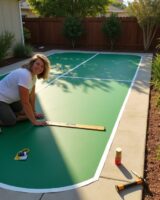
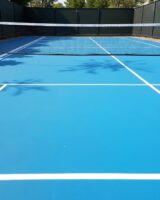
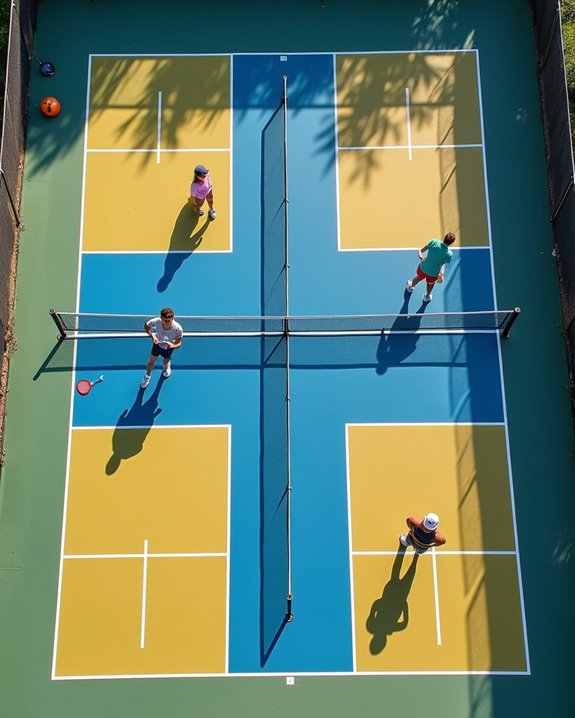
The four essential measurements you’ll need to know for a standard pickleball court add up to 880 square feet of pure playing potential. This rectangle of opportunity—20 feet wide by 44 feet long—forms your playing canvas, where every serve, dink, and smash comes to life.
For comfortable players’ movement, though, you’ll want to simmer in extra space. The recommended total area should be at least 30′ × 60′, giving players room to maneuver without restriction. Your court should feature a 7-foot non-volley zone (think of it as the reduction zone in cooking), plus properly measured service areas that are perfectly portioned at 10′ × 15′ each. Don’t forget those crisp, 2-inch wide court markings—baseline, sideline, and centerline—that frame the court like a perfectly plated dish.
Planning for Buffer Zones: Total Square Footage Needed
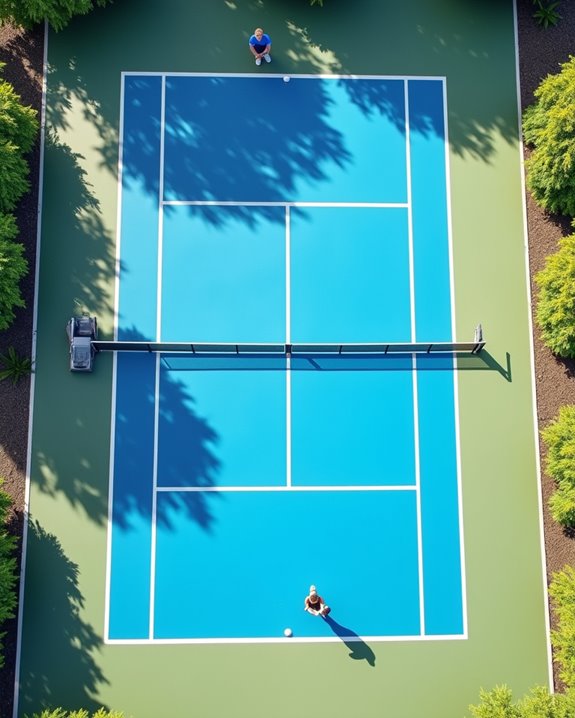
Moving beyond the basic court ingredients, let’s heat things up by examining the full recipe for your pickleball space. While a standard pickleball court requires 880 square feet, you’ll need to fold in generous buffer zones for a properly prepared setup.
The minimum total area should measure 30 feet by 60 feet, serving up 1,800 square feet that guarantees proper player movement and safety. Think of these buffer zones as the breathing room in your culinary masterpiece—at least 10 feet behind each baseline and 5 feet on each side.
Planning multiple courts? Your spatial appetite will grow substantially. Two side-by-side courts demand 4,352 square feet (68′ x 64′). Don’t skimp on these additional measurements, as they create room for spectator areas and enhance the overall flavor of your pickleball experience.

Super value pickleball net: Includes a net, 2 indoor or outdoor balls, storage rack, court marking kit, tape measure, and a 600d carry bag. Everything stays organized and easy to transport, making it simple to bring your net and accessories anywhere

FUN 6 PACK: This set Includes (6) Neon X-40 pickleballs so you can have a collection of balls on hand for training and matches

22FT or 11 FT Pickleball Net - BAGAIL's latest portable pickleball net features two nets - a full-size (36 "H x 22'W) USAPA regulation net and an 11'W half court practice net. Quickly assemble the frame system into 22FT or 11FT depending on your needs, and play with family or friends anywhere - in your driveway or on the indoor court. Suitable for players of all ages and skill levels. Whether practicing solo sessions or hosting social games, this 2-in-1 pickle ball net has you covered
Designing Multi-Court Facilities: Space Efficiency Considerations
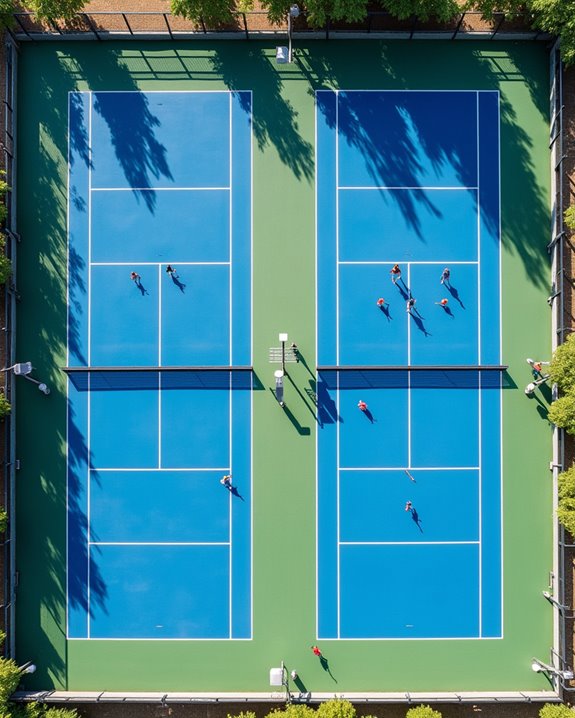
When you’re ready to expand beyond a single court, designing an efficient multi-court facility becomes a delicious challenge that requires strategic spatial planning. You can stack courts like perfectly arranged appetizers to maximize your space yield.
Two side-by-side courts require 3,600 square feet (30 feet wide by 120 feet long), while a four-court configuration can be simmered down into a 7,200-square-foot area (60 feet wide by 120 feet long). Don’t skimp on the buffer zones—fold in at least 10 feet behind each baseline and 5 feet along the sides to guarantee player movement remains fluid and safe.
For the ultimate space efficiency, consider creative court layouts that maintain proper dimensions while reducing the total area needed. Think of it as perfecting your pickleball recipe without sacrificing any essential ingredients.

PREMIUM CARBON FIBER SURFACE for UNMATCHED DURABILITY and SPIN:The professional pickleball paddle's outer carbon fiber layer provides exceptional durability and abrasion resistance while enhancing spin control.Its textured surface allows for better grip on the ball,ensuring precision and power with every shot.Perfect for aggressive and control-focused players alike

𝐑𝐨𝐛𝐮𝐬𝐭 & 𝐖𝐞𝐚𝐭𝐡𝐞𝐫-𝐑𝐞𝐬𝐢𝐬𝐭𝐚𝐧𝐭 𝟒𝟓-𝐬𝐭𝐫𝐚𝐧𝐝 𝐇𝐃𝐏𝐄 𝐤𝐧𝐨𝐭𝐭𝐞𝐝 𝐍𝐞𝐭: features 6" side and 3" top/bottom bindings in 13.2 OZ 1200D Oxford fabric (0.45mm PVC-backed). Boasting excellent anti-UV and anti-aging properties, it’s water-repellent and can withstand over 283 lbs of tensile strength. 3 bottom drain holes prevent water buildup, while reinforced corners avoid tears. Offers top-notch impact and UV protection, ideal for outdoor, beach, grass, and backyard play.

USA PICKLEBALL ASSOCIATION APPROVED: Enjoy unmatched quality and performance on the court with this Rally Republic pickleball paddle. Compliant with all standard rules and regulations, our premium paddles are USA Pickleball Association approved for tournament play. For players of all skill levels.
Surface Materials and Their Impact on Court Size
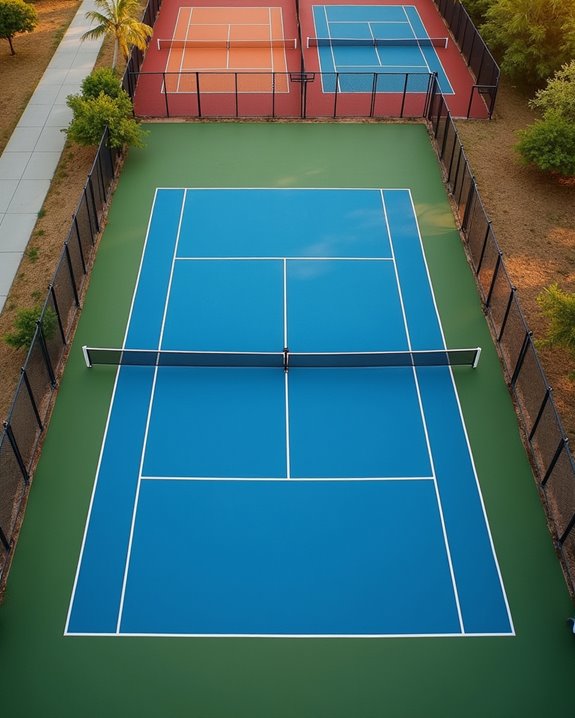
Beyond the layout of your courts comes another key ingredient in your pickleball recipe—surface materials that don’t just affect how the ball bounces, but actually influence the total square footage you’ll need.
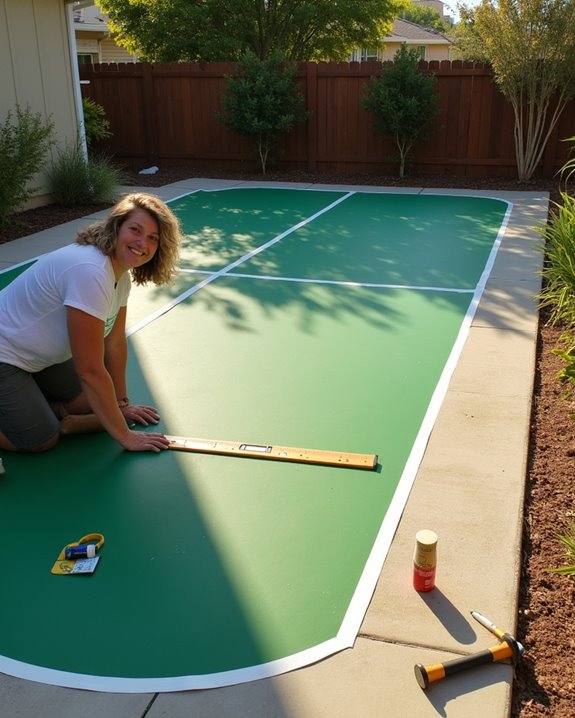
When seasoning your playing surface, remember that concrete delivers a consistent, predictable bounce like a perfectly reduced sauce. You’ll need to allocate the full recommended 30′ × 60′ dimensions because players move confidently on this grippy surface. Asphalt, while more budget-friendly, can be less forgiving on player joints and may require additional space for safer movement.
Modular tiles or specialized court surfaces enhance grip and traction, potentially allowing you to trim space requirements slightly. However, never scrimp on the safety buffer! Your court’s surface texture directly affects how players slice through the space during intense rallies.

EASY TO SET UP - Create the ideal floor for roller skates, dance or any sports & events. Designed with rigid materials, these tiles offer versatility for both indoor and outdoor use. With many colors to choose from, you can easily customize your temporary flooring over carpet or set up a training floor for an unforgettable training zone.

Clearly state: For ≥98% ball bounce, install only on solid, flat surfaces like concrete, asphalt, or tightly packed soil. On soft/uneven ground, it functions primarily as a drainage/utility mat

Available in 4 interesting colors to aesthetically complement any indoor or outdoor floor
Adapting Existing Spaces: Converting Tennis Courts to Pickleball
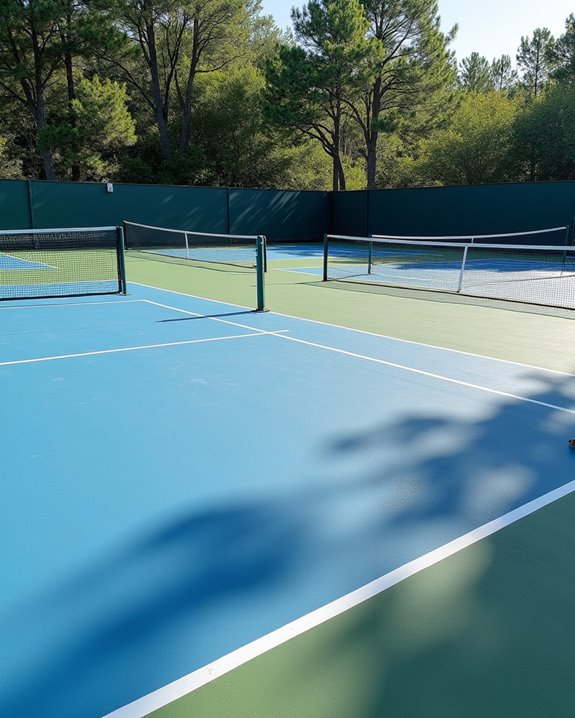
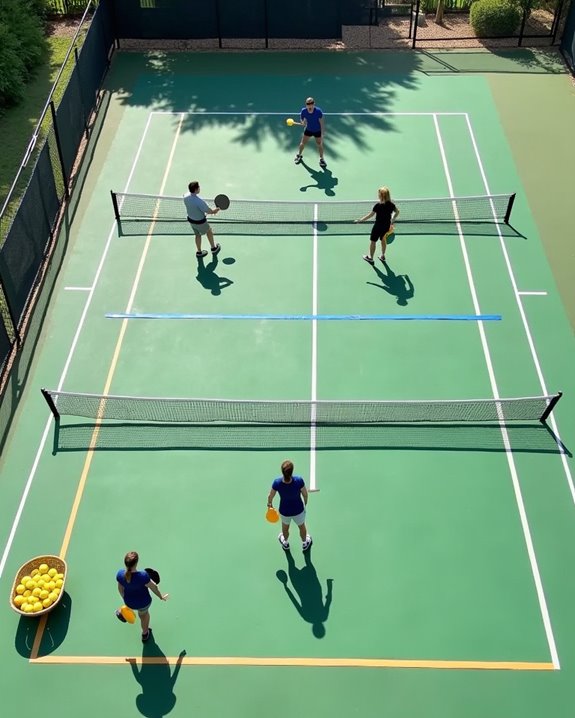
If you’ve got access to a tennis court but crave the faster-paced sizzle of pickleball, you’re sitting on prime real estate for conversion! A standard tennis court can be transformed to accommodate two pickleball courts side by side, making efficient use of your 78′ x 36′ space.
Start by lowering the existing tennis net to 36″ at the sides and 34″ in the center – like adjusting a rack in your oven for perfect browning. Then, slice up your court with fresh lines: each pickleball court needs just 800-880 square feet (20′ x 44′). Don’t forget to mark your non-volley zone (the “kitchen”) 7 feet from the net and service areas.
This tasty transformation lets multiple pickleball players enjoy the game simultaneously – serving up maximum enjoyment from your existing courts!
Frequently Asked Questions
How Many Sq Ft Does a Pickleball Court Need?
Concrete jungle meets community playground! You’ll need 800-880 square feet for basic court dimensions, but pickleball regulations suggest 1,800-2,000 square feet total for proper space requirements in both indoor setups and outdoor courts.
What Is the Best Surface for a Pickleball Court?
For your pickleball court, concrete offers the best durability and consistent gameplay. You’ll find asphalt more cost-effective but requiring maintenance. Indoor courts benefit from polyurethane surfaces, while weather-resistant painted concrete works excellently for outdoor options.
What Is the Standard Size for Pickleball?
Like a canvas awaiting the artist’s touch, your standard pickleball court dimensions measure 20′ × 44′, with a net height of 36″ at sides and 34″ center. Indoor and outdoor pickleball standards remain consistent for recreational play.
How Much to Build a Pickleball Court in a Backyard?
You’ll spend $27,000-$72,000 for backyard court construction, depending on material costs, fencing options, drainage solutions, and lighting installation. Consider maintenance requirements, landscaping ideas, accessibility features and zoning regulations before starting your project.