As an Amazon Associate, we earn from qualifying purchases. Some links may be affiliate links at no extra cost to you. Although our opinions are based on curated research, we haven't used these products. Articles generated with AI.

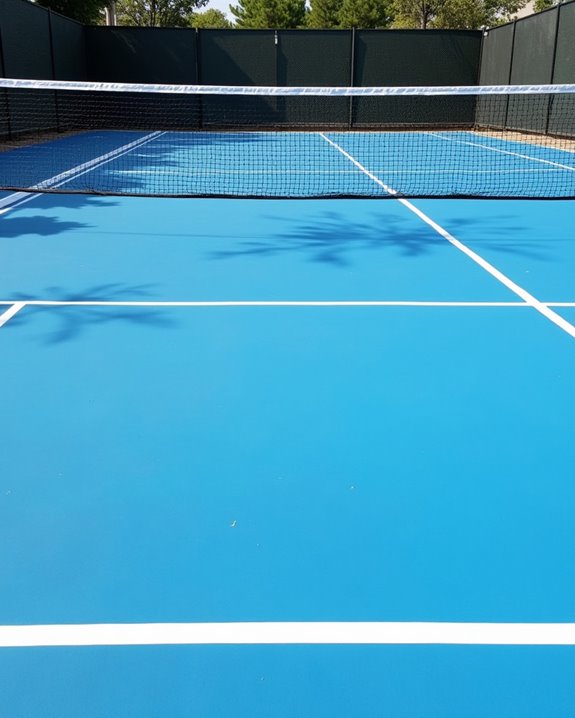
Does a Regulation Pickleball Court Look Like This?

A regulation pickleball court measures exactly 20 feet wide by 44 feet long with clear lines marking the 7-foot non-volley zone (kitchen) from the net. You’ll notice the service areas split into left and right sections, creating four equal boxes for proper serving. The net stands 34 inches at center and 36 inches at sidelines. Court surfaces vary from concrete to asphalt, but dimensions remain consistent for that crisp, satisfying play experience. Let’s explore how these measurements impact your game strategy.
Key Takeaways
- Regulation pickleball courts measure 20 feet wide by 44 feet long with a total playing area of 30×60 feet.
- The non-volley zone extends exactly 7 feet from the net on both sides of the court.
- Court lines should be 2 inches wide with high contrast against the playing surface.
- The net height is 34 inches at center and 36 inches at the sidelines.
- Each service area measures 10 feet wide by 15 feet deep, with diagonal serving required.
Official Pickleball Court Dimensions and Measurements
You may be interested
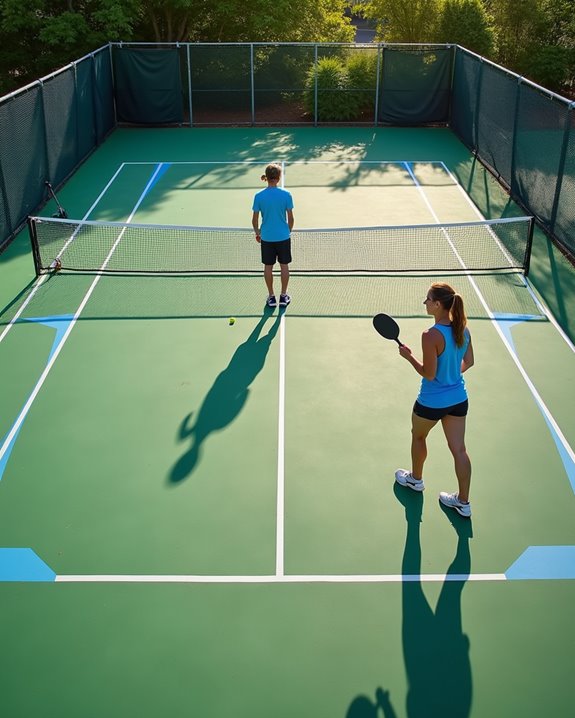
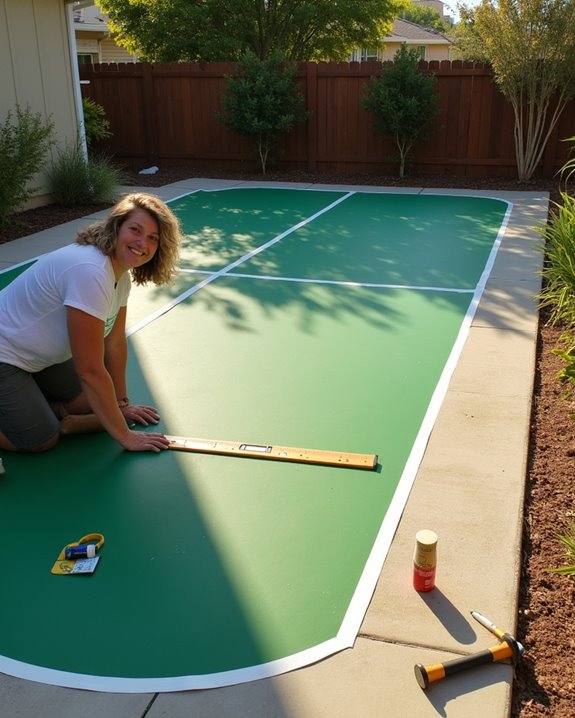
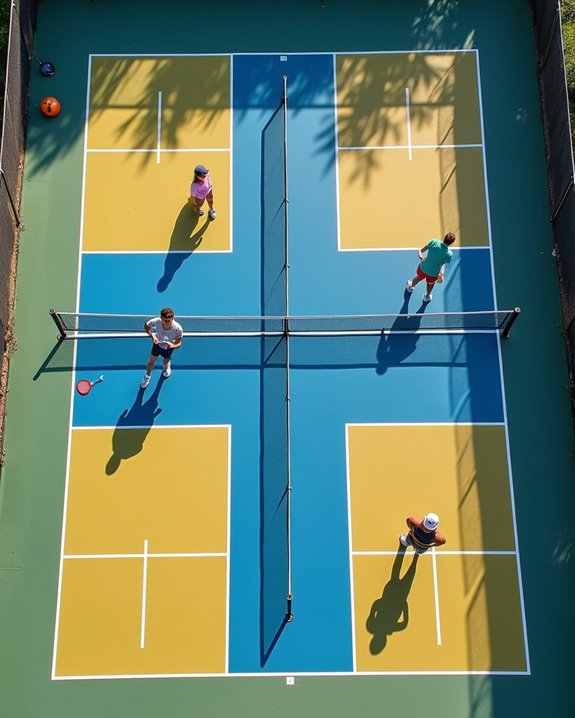
The blueprint for pickleball success starts with understanding the precise court dimensions you’ll be playing on. A regulation size pickleball court measures exactly 20 feet wide by 44 feet long, perfectly proportioned for both singles and doubles play. Think of it as your kitchen workspace—everything has its place! If you want the full numbers on every zone, check our guide to pickleball court dimensions.
For ideal movement, you’ll need a minimum playing area of 30 feet by 60 feet surrounding the court. The playing surface is divided by a net standing 34 inches at center and rising to 36 inches at the sidelines—similar to how a perfectly leveled cutting board guarantees even slices.
The court’s lines must be 2 inches wide with high contrast, while the non-volley zone (the “kitchen”) extends 7 feet from the net, creating a safe space where players cannot volley the ball.
Recommended Products

EVERYTHING YOU NEED: Our pre-measured pickleball court marking kit includes (2) sidelines, (2) baselines, (2) middle serve lines (2) kitchen lines, and net hash marks, all ready to peel-and-stick. Each kit includes step-by-step illustrated instructions to guarantee a perfectly square, regulation court — even for first-time installers.

TRANSFORM any court area into a pickleball court with the Franklin Sports Court Marker Kit. This kit includes all you need to quickly lay out the boundary areas for the game of pickleball in minutes.

[Ultra-durable] Define any space quickly and easily with this floor marking vinyl tape. Our pickleball court tape is tough enough to adhere to any floor or hard surface and remain in place. It can withstand high foot traffic and equipment, so you can depend on this floor tape to keep your areas spaced and marked.
The Kitchen: Understanding the Non-Volley Zone
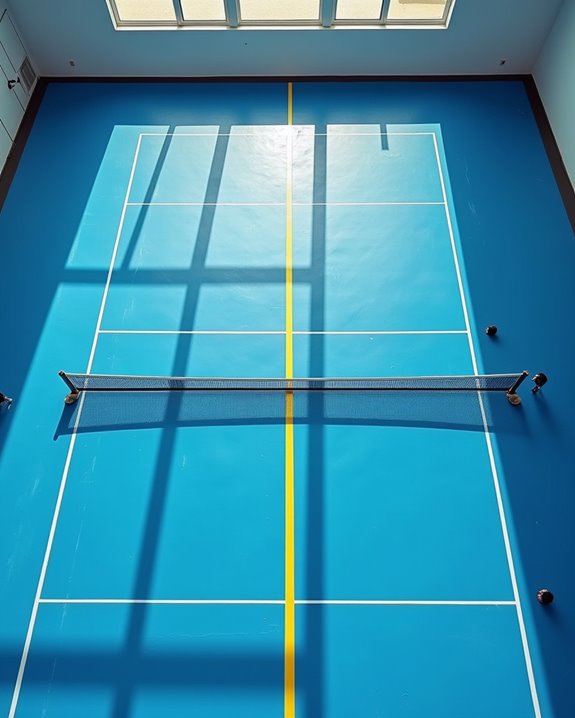
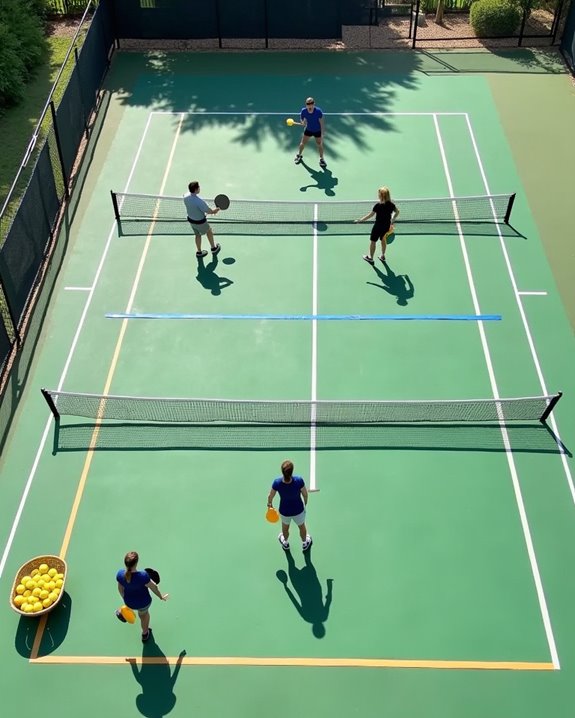
While its name might make your stomach growl, the kitchen in pickleball isn’t where you’ll whip up a post-game snack! This critical 7-foot non-volley zone extends from the net on both sides of the court, creating a no-volleying area that spices up your game strategy.
You’ll need to remember that you can’t stand in the kitchen (or even on its boundary line) when volleying the ball. Think of it as a hot stovetop you can’t touch while serving up those overhead smashes! This rule prevents players from camping at the net and dominating play.
The kitchen’s positioning between the net and service courts creates a perfect recipe for longer rallies and more strategic positioning. Master these court lines, and you’ll be cooking up victories in no time!
Service Areas and Baseline Requirements
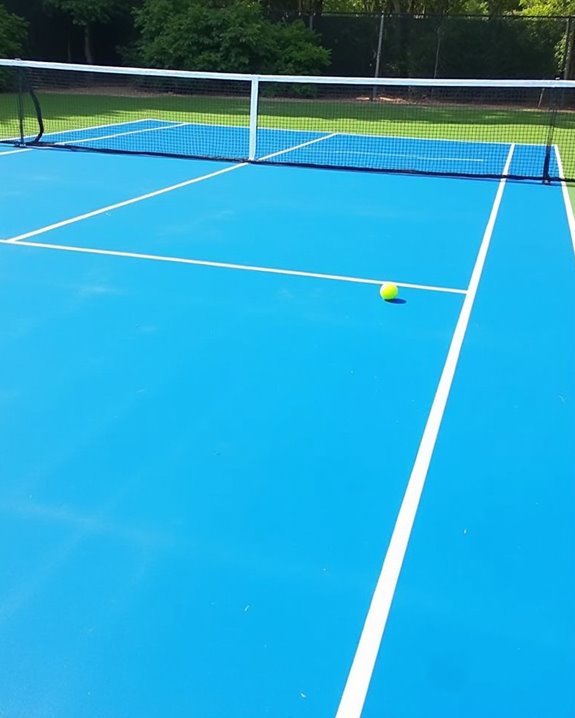
Moving from the spicy kitchen area, let’s heat up your serving game with a look at where you’ll dish out those powerful opening shots!
On a regulation pickleball court, the service areas are perfectly portioned like twin dinner plates, each measuring 10 feet wide by 15 feet deep. You’ll find these serving zones on either side of the centerline, extending from the non-volley line to the baseline. When serving, you must stand behind the baseline (your starting line in this culinary competition) and aim your diagonal serve into your opponent’s service area across the net.
Recommended Products

🎾CONTAINS 28 MARKERS: 10 yellow I-shaped and orange I-shaped, 4 yellow L-shaped and orange L-shaped.(After receiving it, please press the court sticker firmly on a flat surface for a few minutes to restore its shape.)

【Portable Design】Pickleball court markers with carrying bag, let you outline a regulation official size portable pickleball court. Use this pickleball lines such as driveway, backyard, park, beach or gymnasium.

Quick Regulation Pickleball Court Set-up: Create a full pickleball court in minutes with this pickleball court marking kit. Designed for regulation dimensions without paint or permanent installation—ideal for driveways, gyms, or community spaces.
Court Surface Options and Considerations
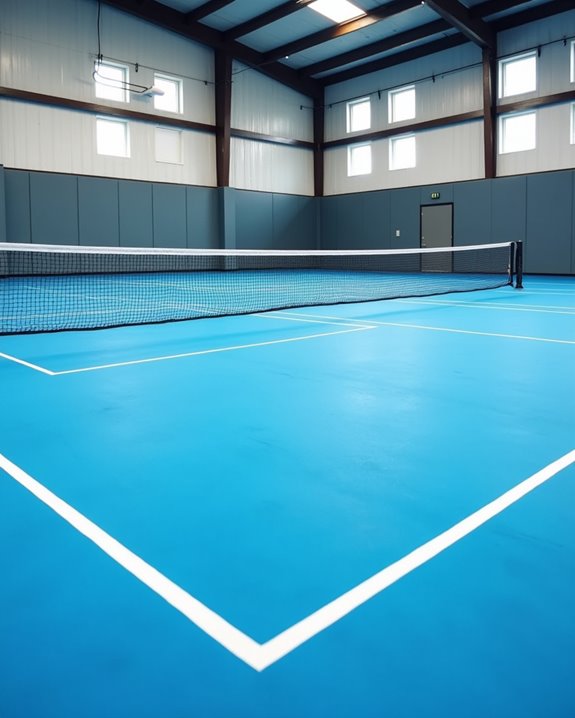
Since you’ll be spending hours perfecting your pickleball recipe, choosing the right court surface becomes as critical as selecting quality ingredients for a gourmet meal! Regulation pickleball courts can be served on various platters, with concrete being the premium choice for outdoor courts—its durability handles the sizzling action without warping. Asphalt offers a more budget-friendly alternative that still delivers consistent bounce.
Need a quick pickleball fix? Existing courts like tennis or basketball surfaces can be transformed into temporary pickleball venues. Just make sure you’ve measured the dimensions of a pickleball court correctly (20′ x 44′) and applied proper line markings for that restaurant-quality experience. Not sure how much total space you’ll need once buffer zones are included? See our breakdown of how many square feet a pickleball court requires.
Safety considerations are non-negotiable! Like avoiding cross-contamination in cooking, steer clear of uneven surfaces that might spoil your game with unwanted trips and falls.
Recommended Products
Includes three pieces of chalk (red, white, blue) to create lane, free throw line, and three-point arc

WORRY-FREE SET: Our team is committed to creating high-quality pickleball court marking kits, so we have carefully prepared a 3-piece pickleball court set to help you get a pickleball court quickly.

Quick And Easy Setup: Transform any space into a pickleball court with our pickleball court marking stencil kit. It's perfect for driveways, home gyms, parks, and indoor facilities. Our versatile court marking kit ensures a professional-quality template for court markings wherever you play. It takes 15-20 minutes to lay out the cardboard stencil kit, then another 15-20 minutes to paint. Let dry for 30 minutes and your pickleball court is ready to play on.
Setting Up Temporary vs. Permanent Courts
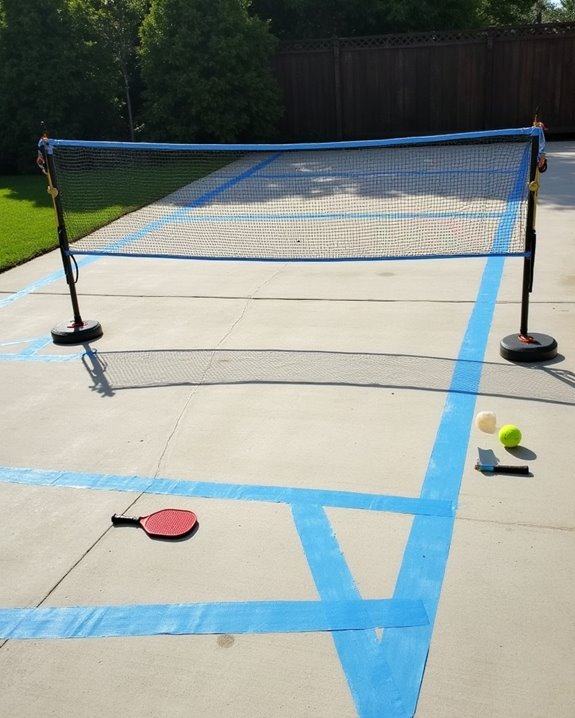
When it comes to creating your pickleball playground, you’ll need to decide whether you’re whipping up a quick temporary setup or investing in a permanent court installation.
Temporary courts can be folded into existing spaces by simply laying down portable nets and marking lines with contrasting tape on surfaces like basketball courts. You’ll need to guarantee the standard dimension of 20′ x 44′ with a minimum play area of 30′ x 60′ for safe movement.
Permanent courts require a more substantial commitment—think of it as the difference between a quick sauté versus slow-roasting. They’ll cost between $20,000-$50,000 when built from scratch using concrete or asphalt. Converting existing courts is a more budget-friendly recipe.
Remember: always get permission from facility owners before marking any surface. Your lines must be precisely placed—just 2 inches wide—according to regulation layout.
Recommended Products

22FT or 11 FT Pickleball Net - BAGAIL's latest portable pickleball net features two nets - a full-size (36 "H x 22'W) USAPA regulation net and an 11'W half court practice net. Quickly assemble the frame system into 22FT or 11FT depending on your needs, and play with family or friends anywhere - in your driveway or on the indoor court. Suitable for players of all ages and skill levels. Whether practicing solo sessions or hosting social games, this 2-in-1 pickle ball net has you covered
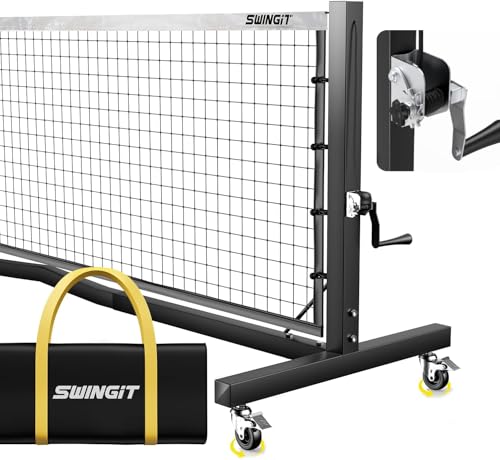
Tournament Performance 22ft Regulation Size: Our pickleball net system meets the official 22ft size as specified by USAPA regulations, with a center height of 34" and a side height of 36". The total length of 22' ensures that this net conforms to official pickleball net dimensions. It's perfect for professional competitions and high-level training

【22 ft or 11 ft Pickleball Net Set】With our net set, the world is in your court! Whether you’re a pro needing regulation size or a casual player wanting something smaller, we’ve got you covered. The 22 ft net is great for full-court matches; the 11 ft version fits quick games or solo practice. Includes a rugged 600D carry bag for easy transport. The set includes one frame and two nets (22ft +11ft).
Singles and Doubles Play: Same Court, Different Strategies
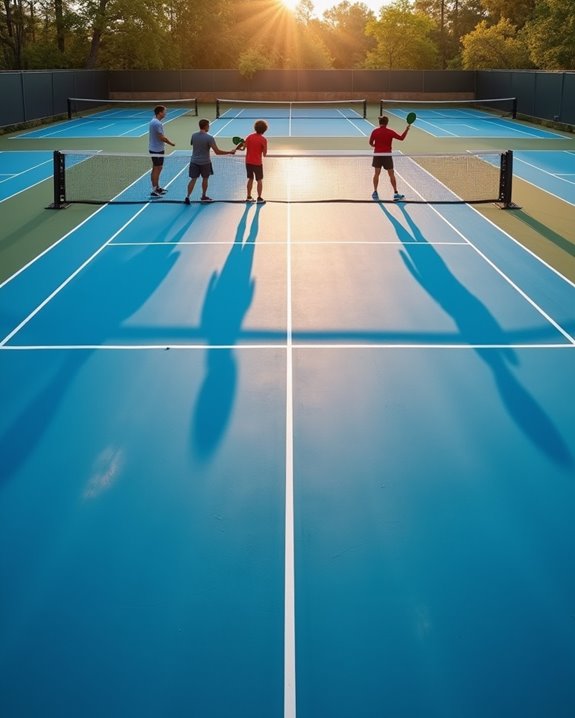
Although the court dimensions remain identical for both game types, the flavor profiles of singles and doubles pickleball couldn’t be more distinct! The court measures 20 by 44 feet regardless of how many players step onto its zesty surface.
When you play pickleball singles, you’ll need to defend the entire court width yourself—a recipe for intense rallies and strategic positioning. Doubles players, however, blend teamwork into their gameplay, sharing court coverage like expert sous-chefs coordinating in a kitchen.
You’ll notice doubles players often simmer near the net, ready to serve up sizzling volleys, while singles competitors might hang back to prepare their defensive marinades. Despite using identical court size, the strategies you’ll employ will differ dramatically—singles demanding individual coverage while doubles requiring perfectly seasoned communication between partners.
Common Mistakes in Pickleball Court Layout
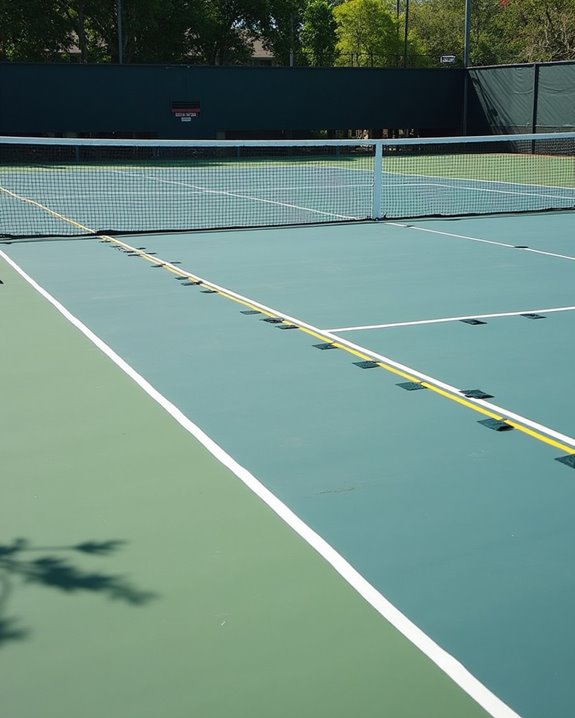
Even passionate pickleball enthusiasts can accidentally fold the wrong ingredients into their court recipe! You’ll want to precisely measure your court dimensions—exactly 20 feet wide by 44 feet long for regulation play—rather than eyeballing it like an impromptu soufflé.
Don’t simmer down on the details! Many players undercook their layout by forgetting the 7-foot non-volley zone (the “kitchen”) or serving up a centerline that doesn’t properly divide the service courts. Your line markings should be 2-inch wide strips—think perfectly uniform lasagna noodles—for proper visibility during play.
Finally, consider your court’s orientation relative to the sun. A poorly positioned court can leave players squinting like they’ve bitten into a lemon during vital afternoon matches!
Recommended Products
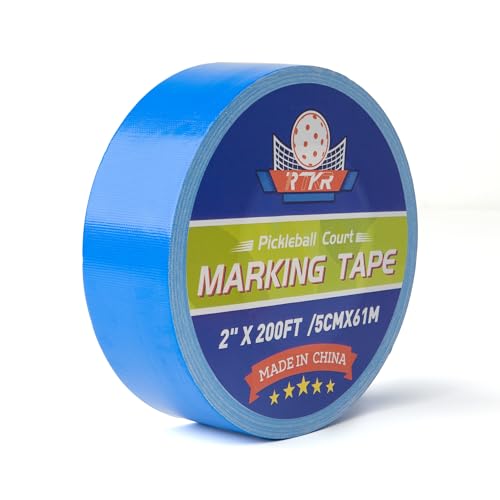
Zero-Residue Removal & Clean Surfaces: Peel away effortlessly leaving absolutely no sticky residue behind. Perfect for protecting gym floors, driveways, and outdoor courts, ensuring a pristine surface every time. (2 inches wide)

ONE ROLL COVERS A FULL COURT - Each 230FT roll is designed to lay out one complete USAPA regulation indoor pickleball court with a little spare. No piecing together short rolls. The current length is 230FT and provides proper coverage for a standard court setup

WORRY-FREE SET: Our team is committed to creating high-quality pickleball court marking kits, so we have carefully prepared a 5-piece pickleball court set to help you get a pickleball court quickly.
Frequently Asked Questions
What Is a Regulation Size Pickleball Court?
A regulation pickleball court measures 20′ × 44′ for both singles and doubles court. You’ll need clear line markings around the play zones with boundary rules requiring a 34″ net height. Various surface materials are acceptable for court layout.
What Does an Official Pickleball Court Look Like?
Quick as a flash, you’ll recognize an official pickleball court by its 44′ x 20′ dimensions, clear boundary lines, 34″ net height, and distinctive court markings including the 7′ kitchen. Playing surfaces vary from concrete to specialized materials.
What Color Is a Regulation Pickleball Court?
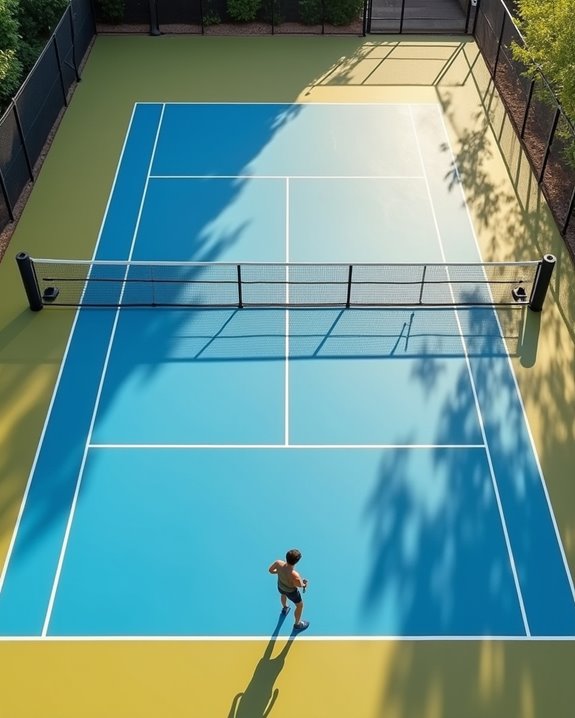
Regulation pickleball courts aren’t limited to one color. You’ll find court surface materials in blue or green with white line markings. Good color contrast benefits visibility whether you’re playing outdoor or indoor, under proper lighting requirements.
Are There Different Types of Pickleball Courts?
Yes, you’ll find various pickleball court types: indoor courts, outdoor courts, multi-sport courts, temporary courts, permanent courts, community courts, private courts, school courts, and professional courts. Each offers different playing experiences and accessibility options.